In many families today, parents and children live under the same roof but often struggle to truly understand each other. This growing parenting communication gap has become one of the biggest challenges in modern family life. Despite love and care, misunderstandings, emotional distance, and repeated conflicts often create silence where healthy conversation should exist.
Fast lifestyles, digital distractions, academic pressure, and changing emotional needs have made open communication harder than before. As a result, the parent child relationship can become weaker even when both sides want connection. Parents may feel children are not listening, while children may feel they are not being understood.
This emotional disconnect also creates a strong behavior gap, where actions and reactions become more difficult to manage. Understanding the reasons behind the parenting communication gap helps families rebuild trust, respect, and stronger emotional support at home.
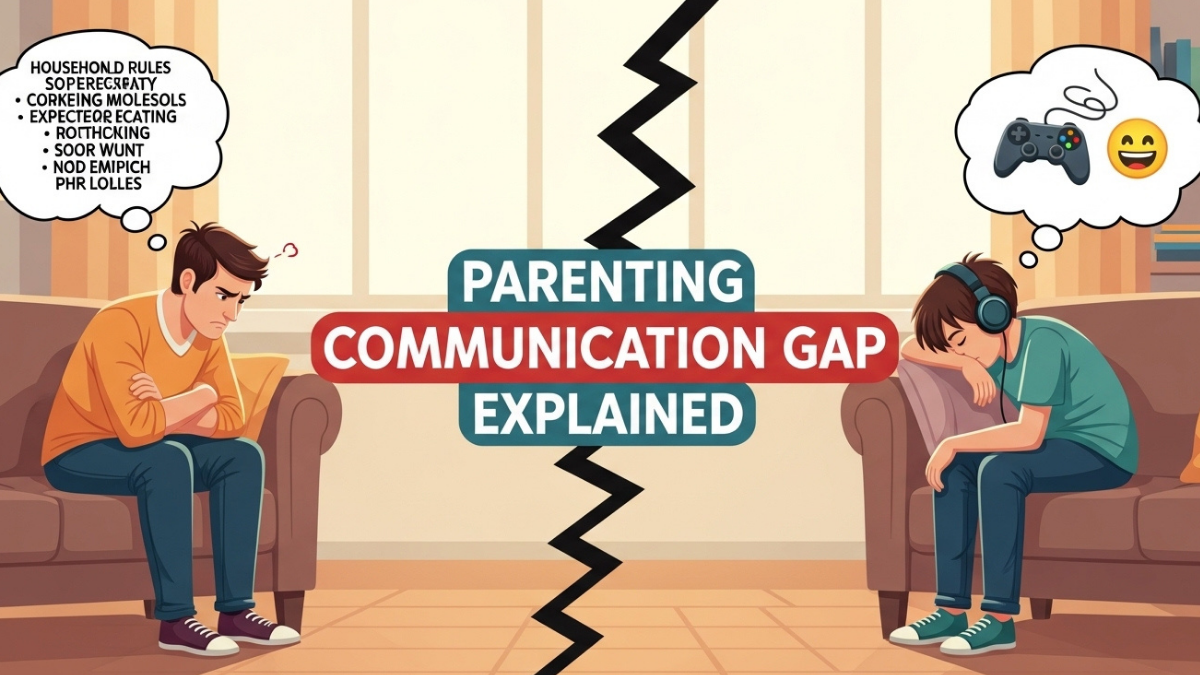
Why Parenting Communication Gap Is Increasing
One major reason behind the parenting communication gap is lack of quality time. Many parents are balancing work, responsibilities, and stress, leaving little emotional energy for calm conversations. Children may receive instructions all day, but not enough meaningful listening.
Technology has also changed the parent child relationship deeply. Phones, social media, and digital entertainment often replace face-to-face conversations. Families may spend hours together physically while remaining emotionally disconnected.
Generational differences create another challenge. Parents and children often think differently about emotions, discipline, freedom, and personal choices. When these differences are handled with judgment instead of understanding, the behavior gap becomes stronger.
Academic pressure also adds stress. Many conversations at home focus only on school performance, responsibilities, or mistakes. Without emotional connection beyond performance, children may stop sharing personal thoughts and feelings openly.
How Parent Child Relationship Gets Affected
A weak parent child relationship often begins with small misunderstandings that grow over time. When children feel constantly corrected but rarely heard, emotional trust becomes weaker. They may start hiding feelings instead of sharing them.
The parenting communication gap can also create emotional distance during teenage years. Children naturally seek independence, but without healthy conversation, parents may interpret silence as disrespect rather than emotional development.
This leads to a stronger behavior gap, where children show frustration through attitude, withdrawal, or anger instead of words. Parents may respond with stricter control, which increases conflict rather than solving it.
Confidence also suffers. Children who feel misunderstood may struggle with self-expression, while parents may feel guilty or helpless about the growing emotional distance. Healthy communication is not only about discipline—it shapes emotional security.
Strong relationships are built through listening, not only instructions.
Common Signs of a Behavior Gap at Home
One clear sign of a behavior gap is repeated arguments over small things. When emotional understanding is missing, even simple daily situations like homework, bedtime, or phone use turn into major conflicts.
Another sign is emotional withdrawal. Children may stop sharing personal experiences, avoid family conversations, or spend more time isolated. This often reflects a deeper parenting communication gap, not just normal mood changes.
Parents may also notice defensive reactions. When every conversation feels like criticism, children respond with anger or silence. This damages the parent child relationship and creates emotional distance on both sides.
Lack of trust is another warning sign. If children hide problems, lie frequently, or avoid asking for help, communication has likely become unsafe or uncomfortable. These signs should be taken seriously before the gap grows wider.
Early attention prevents long-term emotional separation.
Table: Healthy Communication vs Parenting Communication Gap
| Healthy Family Communication | Parenting Communication Gap |
|---|---|
| Open and calm conversations | Frequent arguments and silence |
| Listening without immediate judgment | Constant correction without listening |
| Emotional safety and trust | Fear of sharing feelings |
| Clear boundaries with respect | Control without understanding |
| Strong parent child relationship | Growing emotional distance |
| Smaller behavior gap | Repeated conflict and misunderstanding |
This table shows how the parenting communication gap affects daily family life. Strong emotional connection reduces the behavior gap and improves the overall parent child relationship.
How Parents Can Reduce the Communication Gap
The first step to fixing the parenting communication gap is active listening. Parents should focus on understanding before correcting. Sometimes children need emotional support first, not immediate advice or discipline.
Creating daily conversation time helps strengthen the parent child relationship. Simple routines like dinner talks, evening walks, or device-free family time allow natural communication without pressure.
Parents should also avoid using fear as the main form of discipline. Respect creates stronger honesty than control. When children feel safe speaking honestly, the behavior gap becomes easier to manage.
Asking open-ended questions is also powerful. Instead of only asking about homework or results, parents should ask how children feel, what they think, and what challenges they are facing emotionally.
Consistency matters too. Trust is built slowly through repeated safe conversations, not one serious discussion. Reducing the parenting communication gap requires patience, not perfection.
Conclusion
The parenting communication gap is one of the most important family challenges today because emotional connection shapes everything else in parenting. Love alone is not enough—children also need to feel heard, understood, and emotionally safe.
A strong parent child relationship grows through listening, patience, and everyday trust. Without this foundation, even small problems can turn into major emotional distance and a larger behavior gap.
Parents do not need perfect words. They need consistent presence, honest communication, and the willingness to understand changing emotional needs. Small daily efforts often create the biggest long-term results.
When families reduce the parenting communication gap, they build homes where discipline feels supportive, trust feels natural, and relationships grow stronger with time.
FAQs
What is parenting communication gap?
The parenting communication gap refers to emotional and conversational distance between parents and children that creates misunderstandings, silence, and repeated family conflicts.
How does parent child relationship become weak?
The parent child relationship becomes weaker when listening is replaced by constant correction, emotional trust is missing, and quality conversation becomes rare.
What causes a behavior gap between parents and children?
A behavior gap often grows because of poor communication, emotional misunderstanding, unrealistic expectations, and lack of safe conversations at home.
How can parents improve communication with children?
Parents can improve communication by listening actively, spending quality time, asking open questions, and creating emotional safety instead of fear-based discipline.
Is teenage silence always a communication problem?
Not always, but repeated emotional withdrawal and lack of trust may signal a deeper parenting communication gap that needs attention.
Click here to learn more