Work culture has changed significantly in recent years, and one of the strongest shifts is the rise of the silent productivity work style. Earlier, productivity was often associated with visible activity—constant meetings, fast replies, busy calendars, and loud collaboration. Today, many professionals are moving toward a quieter approach where focus, concentration, and meaningful output matter more than visible busyness. This change is closely connected to deep work culture and the growing preference for quiet working.
People are beginning to realize that being constantly busy does not always mean being truly productive. Endless notifications, multitasking, and unnecessary meetings often create noise rather than results. The silent productivity work style reflects a mindset where quality of attention becomes more valuable than quantity of visible effort.
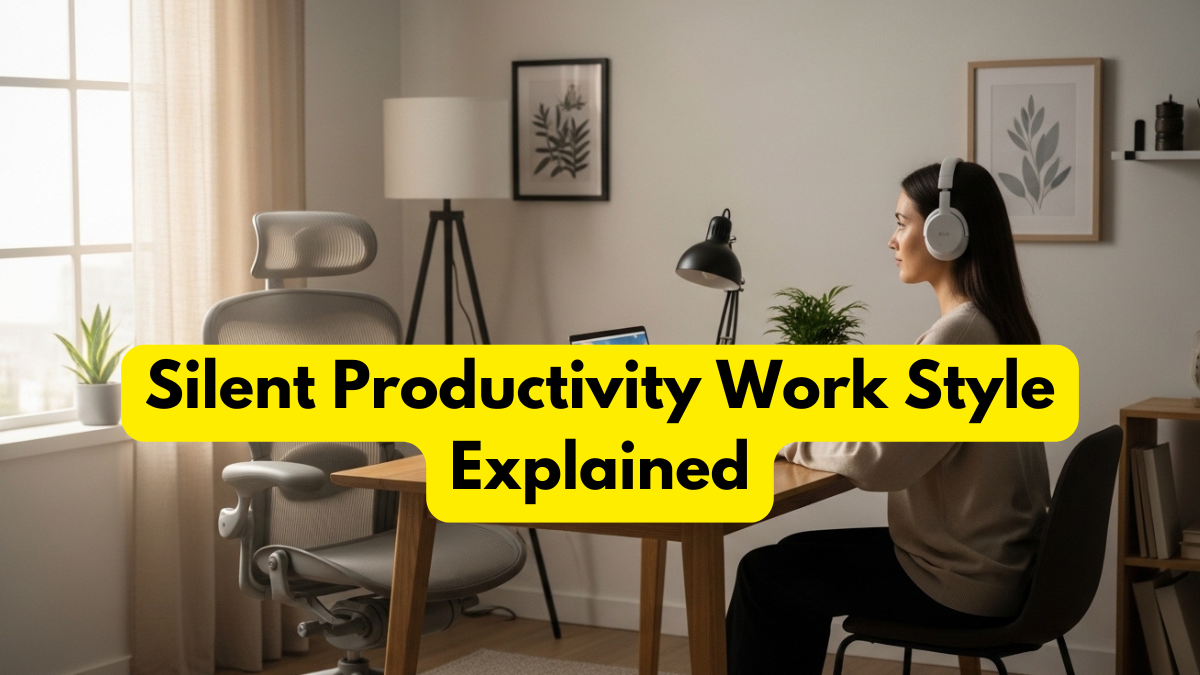
Why Silent Productivity Work Style Is Growing
One major reason behind the silent productivity work style is digital overload. Constant messages, back-to-back meetings, and continuous online availability leave little space for focused thinking. Many professionals are now protecting uninterrupted work time to improve results. This naturally supports deep work culture, where concentration becomes a professional skill.
Remote and hybrid work models have also changed how people define performance. Without physical office visibility, employees focus more on output than appearance. This strengthens quiet working, where progress happens without the need for constant display or public validation.
Another reason is burnout awareness. Many people are questioning productivity habits that create exhaustion without meaningful achievement. The silent productivity work style offers a healthier alternative by reducing unnecessary mental noise and supporting sustainable focus.
How Deep Work Culture Improves Performance
Deep work culture refers to the ability to focus fully on cognitively demanding tasks without distraction. This includes writing, strategy, design, problem-solving, research, and any work that requires sustained mental attention. The silent productivity work style supports this by protecting uninterrupted time.
When people work deeply, they often complete better work in less time. Instead of constantly switching tasks, they give full attention to one important responsibility. This improves quality and reduces stress caused by unfinished mental loops.
Common deep work habits include:
- Blocking distraction-free focus hours
- Turning off unnecessary notifications
- Reducing low-value meetings
- Prioritizing one important task at a time
- Creating quiet working environments
- Scheduling communication around focus time
These practices show how deep work culture creates stronger results through simplicity and concentration.
Quiet Working and the Shift Away from Performance Visibility
Quiet working does not mean working less—it means working with less noise. Many people are moving away from the idea that productivity must be constantly visible to others. The silent productivity work style values calm consistency over performance-based busyness.
In traditional office culture, visible activity often looked like productivity: fast email replies, frequent updates, and packed schedules. But modern professionals increasingly understand that real progress often happens in silence—during thinking, writing, planning, and focused execution.
| Traditional Busy Work Style | Silent Productivity Work Style |
|---|---|
| Constant meetings | Protected focus time |
| Fast visible responses | Thoughtful high-quality output |
| Multitasking all day | One-task concentration |
| Productivity through busyness | Productivity through results |
| Loud collaboration culture | Quiet working with intention |
This table shows how quiet working is changing the professional meaning of efficiency and success.
Benefits and Challenges of Silent Productivity
The silent productivity work style offers many benefits. It improves concentration, reduces stress, and helps people produce higher-quality work with less mental exhaustion. Many professionals also feel more emotionally balanced when quiet working becomes part of daily routine.
This approach supports stronger confidence because results become more important than appearance. People no longer need to constantly prove they are busy. Instead, meaningful work speaks for itself. This strengthens long-term deep work culture and professional trust.
However, challenges also exist:
- Quiet workers may be overlooked in loud workplaces
- Managers may mistake silence for low engagement
- Collaboration can suffer if communication becomes too limited
- Some jobs require fast visible responsiveness
- Building focus habits takes discipline and structure
The goal is not silence for its own sake, but intentional work that protects attention and quality.
Why This Trend Reflects the Future of Work
The rise of the silent productivity work style reflects a larger cultural shift toward intentional work. As knowledge-based jobs grow, thinking clearly becomes more valuable than reacting quickly. This makes deep work culture a long-term professional advantage.
The popularity of quiet working also reflects changing mental health priorities. People want productivity systems that support energy, not constant exhaustion. Employers are beginning to value focused output more than performative busyness.
This trend shows that the future of work may be less about who looks busiest and more about who creates the strongest results with clarity and consistency.
Conclusion
The silent productivity work style shows that modern professionals are redefining success through focus, clarity, and meaningful output. Instead of constant visible busyness, many now choose quiet working that supports stronger concentration and better long-term performance.
A healthy deep work culture allows people to protect attention, reduce unnecessary stress, and create higher-quality results. Productivity becomes something built in silence, not performed for visibility.
Understanding the silent productivity work style helps explain why the best work often happens away from constant noise. Sometimes, the strongest professional progress is the one nobody sees until the results appear.
FAQs
What is silent productivity work style?
Silent productivity work style refers to a work approach focused on concentration, meaningful output, and low distraction rather than visible busyness and constant activity.
What is deep work culture?
Deep work culture is the practice of protecting focused time for important tasks that require full mental attention, such as strategy, writing, and problem-solving.
Does quiet working reduce teamwork?
Not necessarily. Quiet working supports better focus, but balance is important so that communication and collaboration remain strong when needed.
Why is silent productivity becoming popular?
The silent productivity work style is growing because people want less burnout, fewer distractions, and more meaningful results instead of constant busy work.
Can quiet working work in every job?
Not every role supports full quiet work, but most jobs can benefit from some focused time, reduced distractions, and stronger deep work habits.
Click here to learn more