Across the globe, ecologists are increasingly turning to ancient grassland rewilding as a powerful conservation strategy to restore ecosystems damaged by agriculture, development, and climate change. These ancient landscapes once supported vibrant networks of herbivores, carnivores, and complex food chains. By reintroducing native species and allowing natural processes to take over, rewilding efforts have the potential to reshape predator–prey evolution in profound and lasting ways. Understanding how these restored grasslands affect ecological interactions helps scientists predict the future of biodiversity, species resilience, and long-term ecosystem balance.
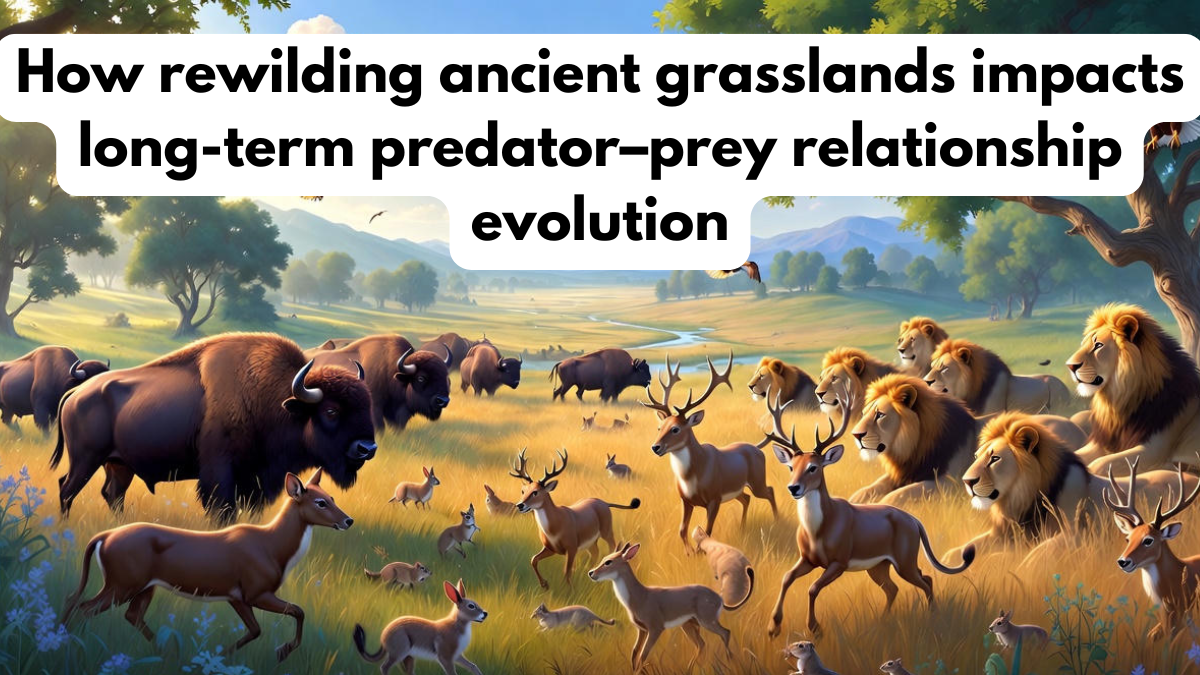
Restoring Natural Dynamics Through Grassland Rewilding
At the heart of ancient grassland rewilding is the goal of returning ecosystems to their pre-disturbance states. Historically, grasslands were home to diverse assemblages of grazing animals, predators, insects, and migratory species. However, centuries of human activity fragmented these landscapes, pushing many species to local extinction. Rewilding reintroduces native herbivores such as bison, antelope, or wild horses, along with apex predators like wolves or big cats. As these species reclaim their ecological roles, the rhythm of predator–prey evolution accelerates. Predators sharpen their hunting strategies, prey become more alert and adaptive, and the landscape itself begins to reflect the renewed energy of natural selection.
The Ecological Ripple Effect of Predators and Prey
One of the most exciting impacts of ancient grassland rewilding is the ripple effect caused by revived predator–prey interactions. When predators return, grazing animals adjust their movement patterns to avoid high-risk zones, which prevents overgrazing and supports healthier vegetation. This creates dynamic mosaics of plant growth, influencing insect populations, soil fertility, and water cycles. Each change feeds into broader cycles of predator–prey evolution, where species continually adapt to one another’s behaviors. Over time, these interactions reestablish complex food webs that increase resilience against environmental change.
Evidence of Evolutionary Shifts in Rewilded Grasslands
Studies from rewilded ecosystems around the world reveal measurable evolutionary adaptations emerging within just a few generations. In reintroduced populations, prey animals often develop sharper senses, faster reflexes, or improved camouflage. Predators, in turn, refine hunting tactics or expand their territorial ranges. These reciprocal adjustments demonstrate how ancient grassland rewilding fuels rapid and ongoing predator–prey evolution. Genetic diversity also rises as populations adapt to new pressures, strengthening resilience against disease and climate fluctuations. Such changes highlight the power of natural selection when species are allowed to interact freely in restored environments.
Table: Ecological Impacts of Ancient Grassland Rewilding on Predator–Prey Evolution
Below is a table summarizing how ancient grassland rewilding influences various aspects of predator–prey evolution:
| Ecological Factor | Impact of Rewilding | Contribution to Predator–Prey Evolution |
|---|---|---|
| Predator Return | Reestablishes natural hunting pressure | Drives adaptive behaviors in prey species |
| Prey Reintroduction | Restores grazing balance | Encourages predators to adapt strategies |
| Vegetation Growth | Improves habitat complexity | Shapes movement, camouflage, and survival |
| Genetic Diversity | Increases due to natural selection | Strengthens long-term species resilience |
This comparison highlights why rewilding is such a powerful force in rebuilding functional ecosystems.
Supporting Biodiversity and Long-Term Ecological Stability
The greatest long-term benefit of ancient grassland rewilding lies in its ability to enhance biodiversity and ecological stability. Predator–prey interactions help maintain population balance, preventing overpopulation or ecosystem collapse. As species behaviors evolve, they create more stable ecological relationships that support a wide range of flora and fauna. The renewed cycles of predator–prey evolution also reduce invasive species dominance, allowing native plants and animals to thrive. Over time, these strengthened ecosystems become more resilient to environmental stressors such as drought, disease, or temperature fluctuations.
Future Implications for Conservation and Climate Adaptation
As climate change continues to reshape habitats, ancient grassland rewilding offers a crucial strategy for maintaining ecological continuity. Rewilded landscapes act as living laboratories where scientists can observe adaptive processes firsthand. Understanding predator–prey evolution in restored systems helps conservationists anticipate how species will respond to shifting conditions. These insights may guide future wildlife management, land-use planning, and global conservation frameworks. By promoting natural adaptation and restoring ecological processes, grassland rewilding provides a model for sustainable, long-term biodiversity protection.
Conclusion
Ancient grassland rewilding is far more than a restoration project—it is a catalyst for renewed ecological evolution. By reintroducing predator and prey species to their ancestral habitats, rewilding reinvigorates natural selection, strengthens biodiversity, and shapes long-term predator–prey evolution. These revitalized landscapes demonstrate the resilience of nature when given space to heal. As conservationists continue to explore rewilding across the globe, ancient grasslands will play a vital role in rebuilding ecosystems capable of adapting to an uncertain and rapidly changing future.
FAQs
How does ancient grassland rewilding affect predator–prey evolution?
It restores natural interactions between predators and prey, encouraging adaptive behaviors and renewed ecological balance.
Why are predators important in rewilded grasslands?
Predators regulate prey populations and drive natural selection, supporting healthy ecosystem function.
Do rewilded prey species evolve differently?
Yes, they often develop stronger senses, faster reflexes, and improved survival strategies.
Can rewilding help ecosystems adapt to climate change?
Absolutely. By strengthening biodiversity and natural selection cycles, rewilded ecosystems become more resilient to environmental stressors.
Click here to learn more