The rapid rise of synthetic media has made deepfake detection tools a critical necessity in the digital age. Advances in artificial intelligence have made it easier than ever to create highly realistic AI images, videos, and audio that are difficult to distinguish from real content. While these technologies offer creative and commercial benefits, they also pose serious risks related to misinformation, fraud, and reputational harm. As deepfakes become more convincing, the challenge of identifying manipulated content grows more urgent.
Governments, technology companies, and researchers are responding by developing deepfake detection tools designed to identify synthetic media before it spreads widely. Alongside technical solutions, new legislation and stronger verification standards are emerging to protect individuals, institutions, and democratic processes. Together, these efforts aim to restore trust in digital content.
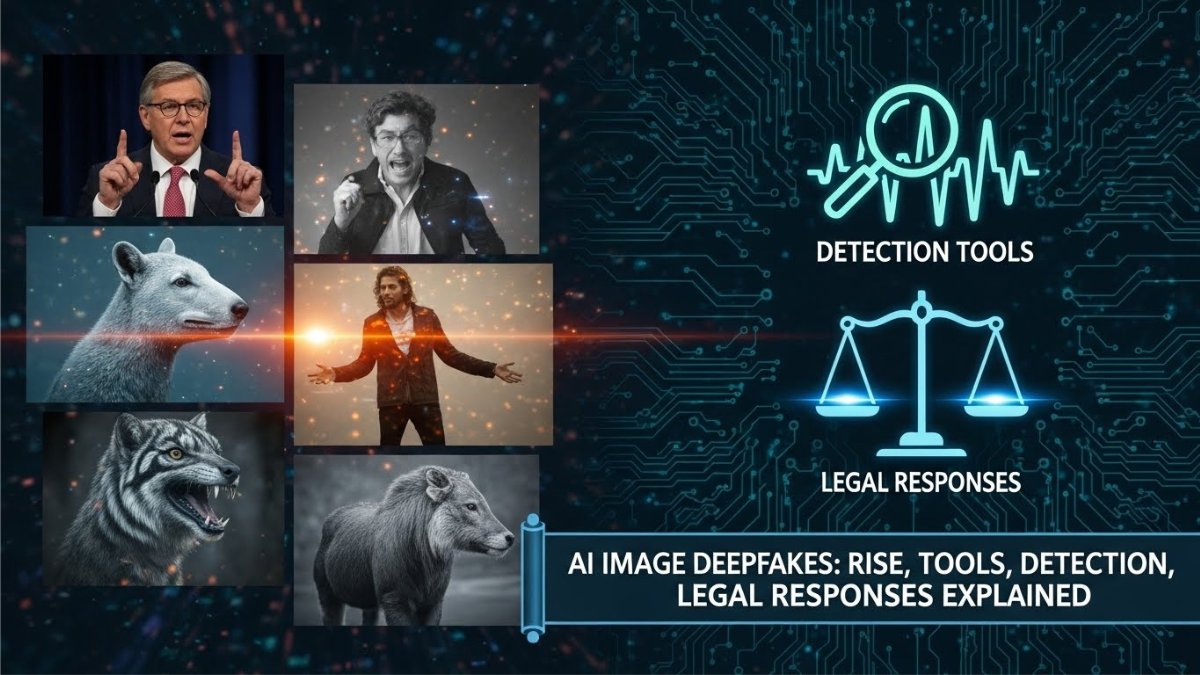
How AI Images and Deepfakes Are Created
Understanding the threat requires knowing how AI images and deepfakes are produced. Modern generative models can synthesize faces, voices, and entire scenes using large datasets and advanced neural networks. These systems learn patterns in real media and replicate them with startling accuracy. As a result, fake content can appear authentic even under close scrutiny.
The accessibility of these tools has contributed to the rapid spread of manipulated content. What once required technical expertise is now available through user-friendly applications. This ease of creation increases the demand for reliable deepfake detection tools, as traditional methods of visual inspection are no longer sufficient. Without effective verification, distinguishing real from fake becomes increasingly difficult.
How Deepfake Detection Tools Work
Modern deepfake detection tools rely on a combination of machine learning, pattern recognition, and metadata analysis. These tools examine inconsistencies in lighting, facial movement, pixel structure, and audio synchronization that are often present in synthetic media. Some systems analyze how AI images differ statistically from natural photographs, while others track the origin and modification history of files.
Below is an overview of common detection approaches:
| Detection Method | What It Analyzes | Purpose |
|---|---|---|
| Visual artifact analysis | Pixel and lighting inconsistencies | Identify synthetic patterns |
| Audio analysis | Voice modulation irregularities | Detect fake audio |
| Metadata inspection | File origin and edit history | Support verification |
| AI-based classifiers | Learned deepfake features | Automated detection |
| Watermarking | Embedded authenticity markers | Prevent misuse |
These deepfake detection tools are becoming more sophisticated, but they must continually evolve as generative techniques improve. Effective verification depends on keeping pace with advancements in AI images and synthetic media generation.
Verification Challenges in the Digital Ecosystem
Despite technological progress, verification remains one of the biggest challenges in combating deepfakes. Detection tools are not always foolproof, and false positives or negatives can undermine trust. Additionally, once fake content goes viral, the damage is often done before deepfake detection tools can intervene.
Platforms, journalists, and institutions are now adopting multi-layered verification processes. These include cross-checking sources, using multiple detection tools, and validating content with trusted authorities. As AI images become more realistic, verification is shifting from a single-step check to an ongoing process embedded into digital workflows.
Legal Responses and Emerging Legislation
In response to growing concerns, governments worldwide are introducing legislation aimed at regulating the creation and distribution of deepfakes. These laws seek to balance innovation with protection by penalizing malicious use while allowing legitimate applications. Legislation often focuses on election interference, non-consensual content, and financial fraud.
Some jurisdictions require clear labeling of synthetic media, while others mandate penalties for deceptive use. These legal frameworks complement deepfake detection tools by creating accountability. However, enforcement remains complex due to cross-border distribution and rapid technological change. Effective legislation must evolve alongside detection capabilities and verification standards.
Role of Technology Companies and Platforms
Technology companies play a crucial role in deploying deepfake detection tools at scale. Social media platforms and content hosts are increasingly integrating automated detection systems to flag manipulated AI images before they reach large audiences. These platforms also invest in research partnerships to improve accuracy and speed.
In addition to detection, platforms are enhancing verification features such as content provenance indicators and user reporting mechanisms. Collaboration between private companies, governments, and civil society is essential for addressing the deepfake challenge holistically. Without coordinated action, deepfake detection tools alone cannot fully mitigate the risks.
Societal Impact and Public Awareness
Beyond technology and legislation, public awareness is a critical defense against deepfakes. Educating users about the existence and capabilities of AI images helps reduce the likelihood of deception. Media literacy programs increasingly include guidance on verification and responsible content sharing.
As awareness grows, users become more cautious consumers of digital media. This cultural shift supports the effectiveness of deepfake detection tools by reducing the spread of unverified content. Trust in information ecosystems depends not only on technology but also on informed and vigilant audiences.
Conclusion: Strengthening Trust Through Detection and Verification
The rise of synthetic media has made deepfake detection tools indispensable for maintaining trust in digital communication. As AI images grow more realistic, robust verification processes and adaptive legislation are essential to counter misuse. No single solution can address the problem alone; success depends on a combination of technology, law, and public awareness.
By continuing to refine detection methods and update legal frameworks, society can harness the benefits of AI while minimizing harm. The future of digital trust will be shaped by how effectively deepfake detection tools, verification, and legislation work together to protect truth in an increasingly synthetic world.
FAQs
What are deepfake detection tools?
Deepfake detection tools are technologies designed to identify AI-generated or manipulated media such as images, videos, and audio.
Why are AI images difficult to verify?
AI images closely mimic real photographs, making manual verification unreliable without specialized tools.
How does legislation address deepfakes?
Legislation targets harmful uses of deepfakes, such as misinformation, fraud, and non-consensual content.
Are deepfake detection tools completely accurate?
No, deepfake detection tools are improving but still face challenges as generative AI evolves.
What can individuals do to avoid being misled by deepfakes?
Individuals should practice careful verification, rely on trusted sources, and remain cautious when encountering suspicious digital content.
Click here to learn more