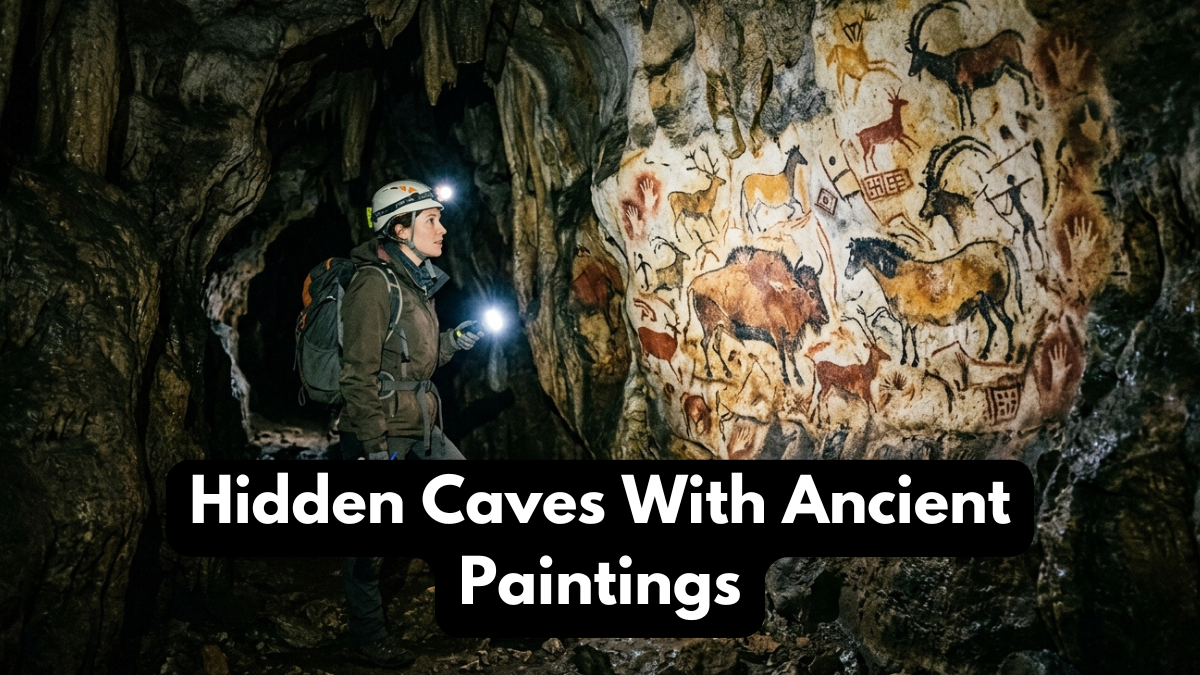
Deep beneath mountains, forests, and rocky landscapes, archaeologists continue uncovering remarkable traces of humanity’s earliest artistic expression. The discovery of hidden caves with ancient paintings has transformed our understanding of prehistoric life by revealing detailed artwork created thousands of years ago. These mysterious cave chambers contain images of animals, hunters, symbols, and handprints that provide valuable insight into the beliefs, traditions, and creativity of early humans.
Many of these remarkable examples of prehistoric art remained hidden for centuries due to remote locations and natural geological changes. Some caves were sealed by rockfalls, while others were forgotten as civilizations evolved and migrated. Today, modern archaeology and scientific technology are helping researchers make new cave discoveries that continue reshaping knowledge about ancient human societies.
The fascination surrounding hidden caves with ancient paintings comes not only from their beauty but also from the mysteries they contain. Historians still debate why early humans created these paintings, what meanings the symbols represented, and how ancient artists produced such sophisticated artwork without modern tools.
Why Ancient Humans Created Cave Paintings
The origins of prehistoric art remain one of archaeology’s greatest mysteries. Historians believe cave paintings may have served spiritual, ceremonial, educational, or storytelling purposes within ancient communities.
Some researchers suggest that early humans created paintings to honor animals they hunted or feared. Others believe these artworks were connected to religious rituals, hunting ceremonies, or communication between tribal groups. The existence of repeated symbols and handprints in many hidden caves with ancient paintings suggests that these locations may have held special cultural significance.
Ancient artists used natural materials such as charcoal, clay, minerals, and plant pigments to create their artwork. Despite limited tools, many paintings demonstrate remarkable skill, detail, and understanding of movement.
Several common themes found in prehistoric cave art include:
- Wild animals
- Human figures
- Hunting scenes
- Handprints
- Geometric symbols
- Spiritual imagery
These themes provide important clues about daily life and beliefs during prehistoric times. Many cave discoveries reveal that art played an important role in early human culture long before written language existed.
Famous Hidden Caves With Ancient Paintings
Archaeologists have uncovered extraordinary examples of hidden caves with ancient paintings across Europe, Asia, Africa, and South America. These sites continue attracting researchers and visitors from around the world.
| Cave Site | Location | Estimated Age | Famous Artwork |
|---|---|---|---|
| Lascaux Cave | France | Around 17,000 years old | Horse and bull paintings |
| Altamira Cave | Spain | Around 36,000 years old | Bison paintings |
| Chauvet Cave | France | Around 30,000 years old | Lions and rhinoceroses |
| Sulawesi Caves | Indonesia | Over 40,000 years old | Hand stencils and animals |
| Bhimbetka Rock Shelters | India | Over 10,000 years old | Hunting and dance scenes |
The Lascaux Cave in France remains one of the most famous examples of prehistoric art because of its detailed animal paintings covering cave walls and ceilings. Similarly, Chauvet Cave contains incredibly realistic depictions of Ice Age animals that continue surprising historians with their artistic quality.
Recent cave discoveries in Indonesia have challenged older theories by showing that ancient artistic traditions existed far beyond Europe. These findings suggest that early humans developed symbolic expression in multiple regions of the world.
Techniques Used in Prehistoric Art
The remarkable quality of prehistoric art demonstrates that ancient humans possessed impressive artistic and observational skills. Cave artists carefully selected wall surfaces and used natural pigments to create long-lasting images.
Researchers studying hidden caves with ancient paintings discovered that artists often mixed minerals such as iron oxide and charcoal with animal fat or water to create paint. They applied colors using fingers, brushes made from animal hair, or hollow bones used for spraying pigment.
Some cave paintings also show evidence of advanced artistic techniques, including shading, perspective, and movement representation. These methods allowed artists to create realistic images of animals running or interacting with one another.
Important painting techniques used by prehistoric artists included:
- Mineral pigment mixing
- Finger painting
- Bone spray painting
- Engraving and carving
- Wall surface preparation
These discoveries continue changing assumptions about the intelligence and creativity of early humans. The advanced nature of many cave discoveries proves that prehistoric societies possessed complex cultural and artistic traditions.
What Cave Discoveries Reveal About Early Humans
The study of hidden caves with ancient paintings provides valuable insight into prehistoric lifestyles, beliefs, and environments. The animals depicted in cave art often reflect species that existed during the Ice Age, helping scientists understand ancient ecosystems and climate conditions.
Many examples of prehistoric art suggest that early humans had strong spiritual connections to nature and animals. Some historians believe cave paintings may have been part of ritual ceremonies designed to ensure successful hunting or communicate with spiritual forces.
The locations of certain caves also indicate that ancient people intentionally selected remote and dark chambers for artistic activities. This suggests that some cave paintings held ceremonial or sacred importance rather than simply decorative purposes.
Archaeologists studying recent cave discoveries also examine tools, bones, fire remains, and footprints found inside cave systems. These artifacts help reconstruct daily life and social organization within prehistoric communities.
Several important insights gained from cave discoveries include:
- Hunting practices
- Animal species and environments
- Social cooperation
- Spiritual beliefs
- Early communication systems
These discoveries continue expanding understanding of human evolution and cultural development.
Preservation Challenges for Ancient Cave Paintings
Although many hidden caves with ancient paintings survived for thousands of years, preserving them today has become a major challenge. Human activity, tourism, humidity, pollution, and climate change can damage fragile prehistoric artwork.
Some famous caves have been closed to the public because breathing, light exposure, and temperature changes caused mold growth and pigment deterioration. Conservation experts now use digital scanning and virtual reality to study and display cave art while reducing damage to original sites.
Protecting prehistoric art is important because these paintings represent some of the earliest examples of human creativity and symbolic thought. Every preserved cave helps historians understand ancient cultures more clearly.
Modern preservation methods include:
- Controlled visitor access
- Climate monitoring
- Digital documentation
- 3D cave scanning
- Protective barriers
These efforts ensure future generations can continue studying remarkable cave discoveries and learning about humanity’s distant past.
The preservation of cave art also reminds modern society about the importance of protecting cultural heritage and archaeological sites around the world.
Conclusion
The discovery of hidden caves with ancient paintings continues providing extraordinary insight into the creativity, beliefs, and lifestyles of prehistoric humans. These remarkable examples of prehistoric art demonstrate that artistic expression and symbolic thinking existed tens of thousands of years ago.
Through ongoing cave discoveries, archaeologists are uncovering valuable evidence about ancient environments, hunting traditions, spiritual practices, and human evolution. The sophisticated techniques used by prehistoric artists prove that early humans possessed impressive intelligence and cultural depth.
As modern technology helps researchers locate and preserve more hidden cave sites, the mystery and beauty of hidden caves with ancient paintings will continue inspiring curiosity and admiration across the world.
FAQs
What are hidden caves with ancient paintings?
They are underground cave sites containing prehistoric artwork created by early humans thousands of years ago.
Why did prehistoric humans create cave paintings?
Researchers believe cave paintings may have served spiritual, ceremonial, educational, or storytelling purposes.
What materials were used in prehistoric art?
Ancient artists used charcoal, minerals, clay, and natural pigments mixed with water or animal fat.
Which is the most famous cave painting site?
Lascaux Cave in France is one of the most famous prehistoric art sites in the world.
Why are cave discoveries important?
Cave discoveries help historians understand early human culture, beliefs, environments, and artistic development.
Click here to learn more