Preparing for exams has become increasingly challenging in 2026 because students face more distractions, tighter academic competition, and growing pressure to perform well. Social media, online entertainment, gaming, and digital overload often reduce concentration and make time management difficult. This is why many students are actively searching for the best study timetable for exams 2026 to improve consistency, focus, and productivity during preparation periods.
A well-structured timetable helps students organize subjects, manage revision, reduce stress, and maintain discipline throughout exam preparation. Without proper exam planning, students often waste time deciding what to study instead of actually learning effectively. Modern educational experts strongly emphasize balanced routines and realistic schedules rather than extreme study pressure. A good study schedule not only improves academic performance but also supports mental health, confidence, and long-term learning habits. In today’s competitive academic environment, smart planning is becoming just as important as hard work itself.
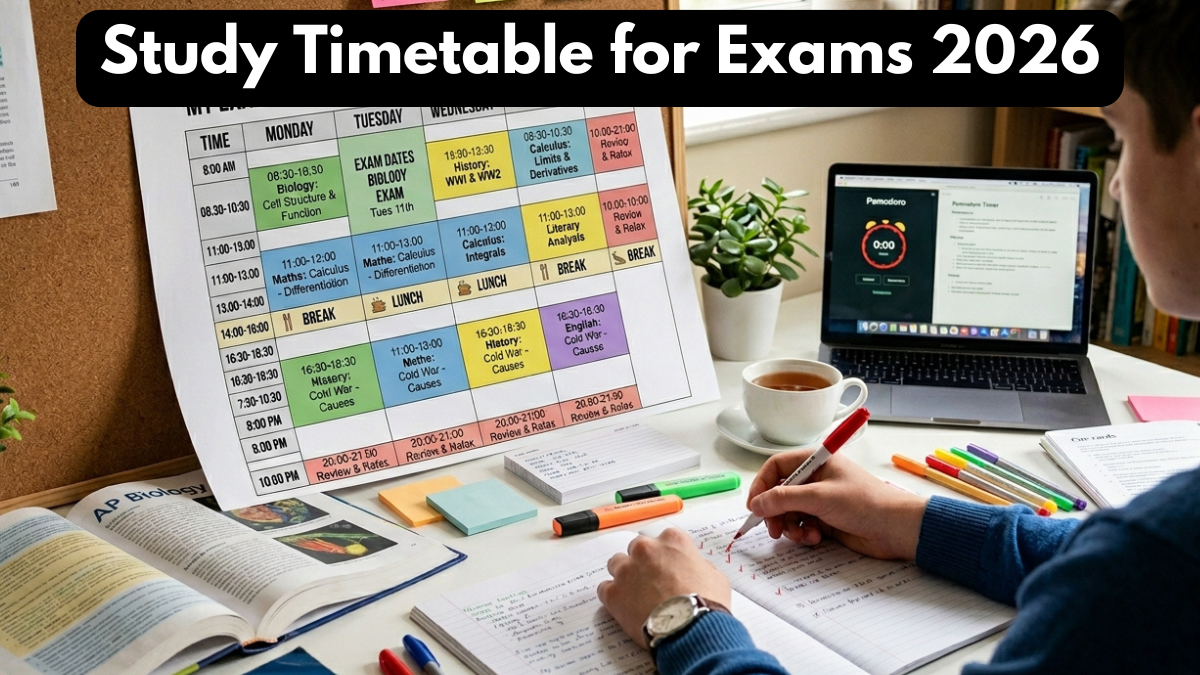
Why Study Timetables Are Important
A proper timetable creates structure and direction during exam preparation. Students with organized routines usually perform better because they manage time more effectively and avoid last-minute panic.
Several reasons explain why a strong study timetable for exams 2026 is important:
- Better time management
- Reduced stress
- Improved revision planning
- Higher consistency
- Better subject balance
- Reduced procrastination
Good exam planning helps students divide workload realistically instead of trying to study everything at once.
Another important benefit of a proper study schedule is improved focus. When students already know what task comes next, they waste less time making decisions and become more productive.
In 2026, educational experts also increasingly recommend flexible study systems that adapt to individual learning styles instead of rigid routines.
Best Study Timetable Structure for Exams
Every student has different strengths, subjects, and learning capacities, but some common principles help most students create effective routines.
| Time Slot | Activity | Purpose |
|---|---|---|
| Early Morning | Revision or difficult subjects | Higher concentration |
| Mid-Morning | Practice questions | Active learning |
| Afternoon | Lighter subjects | Balanced workload |
| Evening | Mock tests or revision | Retention improvement |
| Night | Quick recap | Better memory reinforcement |
A balanced study timetable for exams 2026 should include revision, breaks, practice tests, and sleep management together.
Strong exam planning also focuses on realistic goals instead of unrealistic long-hour study sessions that cause burnout.
An effective study schedule balances productivity with rest because mental fatigue reduces learning efficiency significantly.
How to Create an Effective Study Timetable
Creating a productive timetable requires understanding personal strengths, weaknesses, and energy patterns.
Important steps include:
- Identify difficult subjects
- Prioritize important topics
- Set realistic daily targets
- Include revision sessions
- Add proper breaks
- Maintain sleep schedules
The best study timetable for exams 2026 is one that students can actually follow consistently rather than copying unrealistic routines from social media.
Good exam planning also involves tracking progress regularly and adjusting schedules when necessary.
Students following flexible study schedule systems usually maintain better consistency compared to rigid perfection-based routines.
Another useful strategy is dividing large topics into smaller study sessions to improve focus and reduce overwhelm.
Importance of Breaks and Mental Health During Studies
One of the biggest mistakes students make is studying continuously without proper rest. Mental exhaustion reduces concentration, memory retention, and overall productivity.
Healthy study habits include:
- Taking short breaks
- Drinking enough water
- Getting proper sleep
- Avoiding excessive screen time
- Practicing light exercise
A balanced study timetable for exams 2026 should support both academic performance and emotional well-being.
Experts now strongly recommend healthy exam planning strategies that reduce anxiety instead of increasing pressure unnecessarily.
Modern study schedule approaches focus more on sustainable productivity rather than unhealthy all-night study habits.
Students who maintain mental balance usually perform better during actual exams because stress management improves focus and confidence.
Best Study Techniques for Better Results
Smart study methods can improve learning efficiency significantly.
Popular techniques include:
- Active recall
- Spaced repetition
- Mind mapping
- Pomodoro technique
- Mock testing
- Self-explanation
These methods improve the effectiveness of any study timetable for exams 2026 because they encourage active learning instead of passive reading.
Good exam planning also includes regular testing because practice helps identify weak areas before final exams.
Many successful students combine visual learning, written notes, and revision cycles in their study schedule for stronger retention.
Another major trend in 2026 is AI-assisted learning tools that help students organize notes, summaries, and practice questions more efficiently.
Subject-Wise Time Allocation Tips
Different subjects require different preparation approaches. Students should avoid spending all their time only on favorite subjects.
General allocation ideas include:
- Difficult subjects: More time
- Strong subjects: Maintenance revision
- Practical subjects: Practice sessions
- Theory subjects: Reading and recall
A proper study timetable for exams 2026 should maintain balance across all subjects instead of focusing narrowly on only one area.
Effective exam planning also includes regular revision cycles because forgetting information is natural without repetition.
A smart study schedule prioritizes weak areas while still maintaining overall subject consistency.
Common Mistakes Students Make
Many students fail to achieve expected results because of poor planning habits.
Common mistakes include:
- Studying without goals
- Ignoring revision
- Unrealistic schedules
- Excessive multitasking
- Last-minute cramming
- Poor sleep habits
Avoiding these mistakes is extremely important for building an effective study timetable for exams 2026.
Another major problem in weak exam planning is distraction from smartphones and social media.
Students following disciplined study schedule routines usually perform better because consistency matters more than temporary motivation.
Comparing study hours with others is also harmful because every student learns at a different pace.
Role of Technology in Exam Preparation
Technology now plays a major role in modern education systems.
Popular study tools include:
- AI learning apps
- Flashcard apps
- Online mock tests
- Productivity timers
- Educational YouTube channels
These tools support modern study timetable for exams 2026 strategies by improving organization and accessibility.
Digital exam planning methods also allow students to track progress and manage tasks more efficiently.
However, maintaining balance is important because excessive gadget usage can damage concentration despite supporting study schedule management.
Motivation and Discipline During Exam Preparation
Motivation naturally fluctuates during long preparation periods. This is why discipline is more important than temporary inspiration.
Useful motivation strategies include:
- Setting small goals
- Tracking progress
- Rewarding consistency
- Avoiding perfectionism
- Studying with positive environments
A successful study timetable for exams 2026 depends more on consistency than studying extremely hard for only a few days.
Strong exam planning helps reduce confusion and creates confidence during preparation periods.
Students maintaining realistic study schedule routines usually experience lower stress and better long-term performance.
Future Study Trends in 2026
Education systems are changing rapidly due to technology and AI integration.
Future learning trends may include:
- AI-powered study assistants
- Personalized learning systems
- Interactive digital classrooms
- Smart revision platforms
- Adaptive testing systems
The future of the study timetable for exams 2026 concept will likely become more personalized and data-driven.
Modern exam planning methods increasingly combine productivity science, psychology, and technology together.
Smarter study schedule systems may eventually adapt automatically based on student learning behavior and performance patterns.
Conclusion
A strong study timetable for exams 2026 is essential for managing academic pressure, improving productivity, and achieving better results. Students who organize their preparation properly usually experience lower stress, better focus, and stronger confidence during exams.
Effective exam planning combines realistic goals, regular revision, balanced routines, and healthy habits instead of extreme study pressure. A practical study schedule helps students maintain consistency while improving long-term learning efficiency. In 2026, success in exams depends not only on hard work but also on smart planning, discipline, and maintaining mental well-being throughout the preparation journey.
FAQ
What is the best study timetable for exams 2026?
The best timetable balances study sessions, revision, breaks, sleep, and realistic daily goals according to individual learning needs.
Why is exam planning important for students?
Proper exam planning improves time management, reduces stress, and helps students cover subjects more efficiently.
How many hours should students study daily?
Study hours vary by individual, but consistent focused sessions with proper breaks are usually more effective than extremely long study hours.
Can a study schedule reduce exam stress?
Yes, a proper study schedule creates structure and helps students feel more prepared and confident before exams.
Which study techniques improve exam performance?
Active recall, mock tests, spaced repetition, mind mapping, and regular revision are highly effective study methods.
Click here to learn more