Urban Empathy describes how living in densely populated cities reshapes the way people emotionally respond to others. Cities place individuals in constant proximity to strangers, diversity, noise, and rapid social change. This environment strongly influences City psychology, altering how empathy is expressed, managed, and sometimes suppressed. While cities are often criticized for emotional distance, they also create unique forms of compassion and social awareness. Understanding how Urban Empathy develops explains why city dwellers may appear emotionally guarded yet deeply responsive to collective human experiences.
Sensory Overload and Emotional Filtering
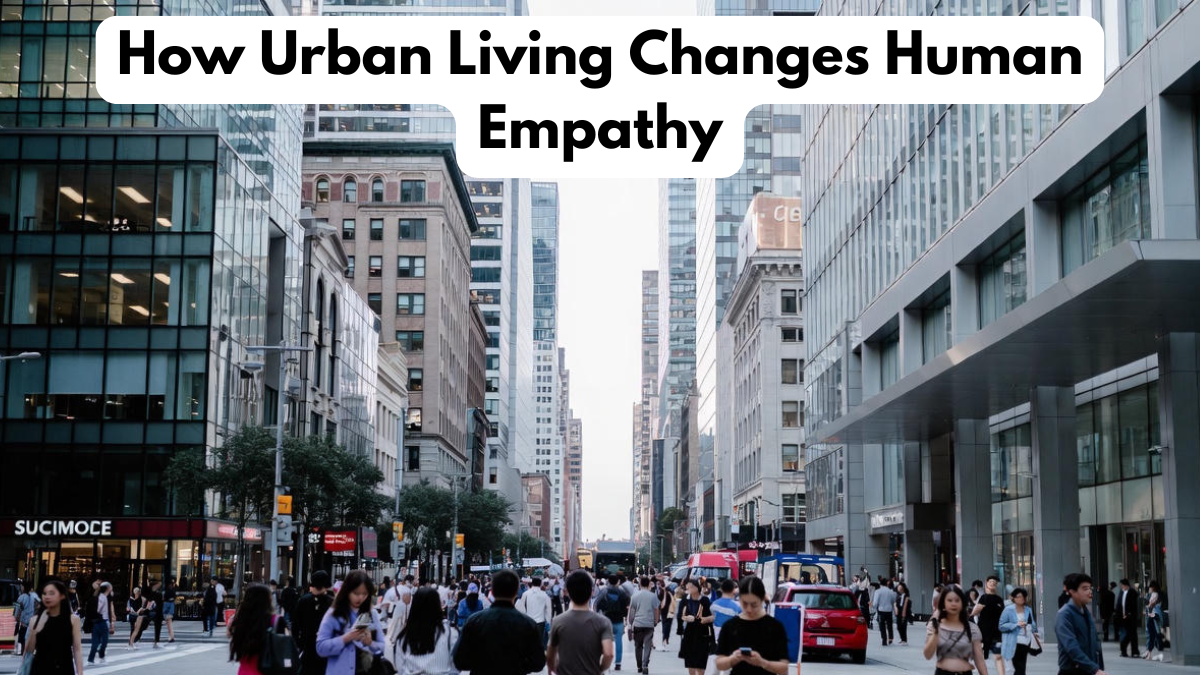
Urban environments bombard the senses with movement, sound, and social interaction. From a City psychology perspective, the brain adapts by filtering emotional input to avoid overload. This adaptation directly affects Urban Empathy. When surrounded by constant stimuli, people learn to regulate emotional responses selectively. Ignoring some emotional cues becomes a survival strategy, not a lack of compassion. This emotional filtering allows individuals to function efficiently, but it can also make empathy appear reduced on the surface.
Proximity, Diversity, and Expanded Empathy
Cities expose people to a wide range of cultures, lifestyles, and struggles on a daily basis. This diversity reshapes Urban Empathy by broadening emotional understanding. Through repeated exposure, City psychology shows that people become more tolerant of difference and more aware of social inequality. Urban residents may develop empathy that is less personal but more collective, responding strongly to social movements, humanitarian causes, or public crises rather than individual encounters alone.
Emotional Distance as a Coping Mechanism
What looks like emotional detachment in cities is often emotional self-protection. Urban Empathy does not disappear; it adapts. City psychology explains that constant exposure to need, urgency, and distress can overwhelm emotional systems. To cope, individuals limit emotional engagement in everyday interactions. This does not mean empathy is absent, but that it is conserved for situations perceived as meaningful or urgent.
| Urban Experience | Psychological Adaptation | Effect on Empathy |
|---|---|---|
| Crowded spaces | Emotional filtering | Reduced surface empathy |
| Cultural diversity | Perspective expansion | Broader social empathy |
| Constant stimulation | Emotional regulation | Selective engagement |
| Public crises | Collective focus | Heightened Urban Empathy |
This table shows how Urban Empathy is shaped by City psychology through adaptation rather than emotional loss.
Collective Empathy and Urban Identity
Cities often produce strong collective emotional responses. During emergencies, celebrations, or social movements, Urban Empathy becomes highly visible. City psychology highlights that shared identity and shared space amplify emotional reactions. People who rarely interact personally may still feel deep solidarity with others during collective moments. Urban empathy often shifts from individual connection to shared emotional experience, reinforcing social cohesion in critical moments.
Long-Term Emotional Effects of Urban Living
Over time, urban living reshapes emotional patterns. Urban Empathy becomes more intentional rather than automatic. People choose when and where to emotionally engage. According to City psychology, this selective empathy allows emotional sustainability in complex environments. While this may reduce spontaneous emotional expression, it often increases thoughtful, value-driven compassion. Urban residents may be less reactive, but more socially conscious and empathetic at a systemic level.
Conclusion
Urban Empathy is not diminished by city life; it is transformed. Influenced by City psychology, urban environments encourage emotional filtering, selective engagement, and collective compassion. While cities may appear emotionally distant, they often cultivate broader awareness and shared responsibility. Understanding this shift helps reframe urban emotional behavior not as indifference, but as adaptation to a complex social landscape.
FAQs
What is urban empathy?
Urban Empathy refers to how empathy is shaped and expressed in densely populated city environments.
It reflects emotional adaptation rather than emotional absence.
Why do city people seem less empathetic?
According to City psychology, emotional filtering helps people cope with constant stimulation and social density.
This can make empathy less visible in daily interactions.
Does urban living reduce empathy?
No, Urban Empathy often becomes more selective and collective rather than disappearing.
City dwellers may show strong empathy during shared social events.
How does city psychology influence emotions?
City psychology explains how urban environments reshape emotional regulation, attention, and empathy over time.
Click here to learn more